PLC Basics Extended Second Edition

Learn everything you need to know (and more!) to setup, use, and program PLCs, including:

✓ What PLCs are, and how they work ✓ Different styles and types of PLCs
✓ Numbering Systems, Data Types ✓ How to read Ladder Logic
✓ Inputs and Outputs, I/O Scan ✓ Bits, Integers, Timers, Counters
✓ Setting up RSLinx Drivers ✓ Creating Programs in RSLogix
✓ Testing Programs in Emulate ✓ Up & Downloading to PLCs

Created by Shawn Tierney
Last updated November 14, 2026
English
6hrs+

Current Status

Not Enrolled

Price

$99.00

Get Started

This course is currently closed

📢 2027 Update

Enrollment in this course now also includes enrollment and early access to the new 2027 course, MicroLogix Programming Level 1. Learn more here »

Buy For Someone Else (Voucher) Open Course Data Sheet (PDF)

Note: to purchase this course for someone else, choose “Voucher.” Enrolling three or more people? Contact us here to learn about our group enrollment program.

At a Glance

Format
Online, self-paced

Lessons
55+ online lessons

Skill Level
Beginner: Basic electrical knowledge and a Windows PC required

Access
Lifetime, no expiration

Certificate
Yes, with PDHs

Starting Price
Standard: $49, Extended: $99

Content Last Reviewed
March 17, 2026

What You’ll Learn:

By the End of This Course, You’ll Be Able To:

  • ✓ Explain what PLCs are and how they work
  • ✓ Identify the different styles and types of PLCs
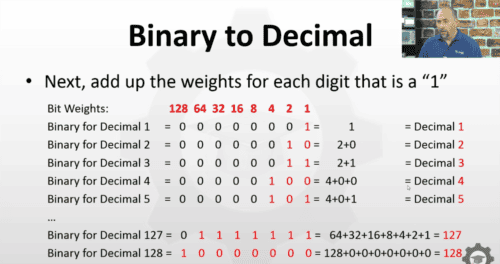
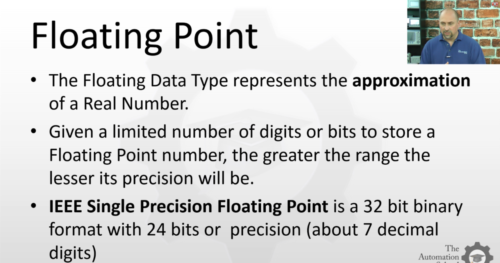
  • ✓ Work with numbering systems and data types
  • ✓ Read Ladder Logic
  • ✓ Understand inputs and outputs, and the I/O scan
  • ✓ Use bits, integers, timers, and counters
  • ✓ Set up RSLinx drivers
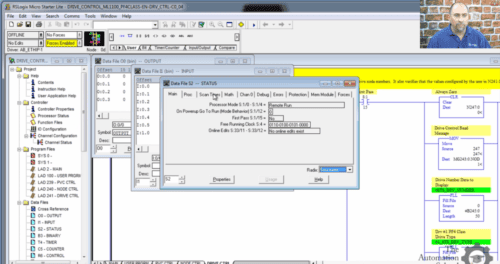
  • ✓ Create programs in RSLogix
  • ✓ Test programs in Emulate
  • ✓ Upload and download programs to PLCs

What You Receive With Your Purchase:

  • ✓ Immediate online access
  • ✓ Fifty-five plus online lessons
  • ✓ Eighteen file downloads
  • ✓ Online instructor support
  • ✓ PLC App Simulator for Win10 & 11
  • ✓ No expiration date
  • ✓ Take lessons in any order
  • ✓ Retake lessons as needed
  • ✓ Completion certificate with PDHs
  • ! PLC hardware & software is NOT included

Proudly Serving Thousands of Individuals and Companies

Georgia-Pacific
Owens Corning
Saint-Gobain
SWM
Tyson
National Gypsum
Louisiana-Pacific
CommScope
Desalitech
Bimbo
Manroland Goss
Martin Marietta
Dynamic Attractions
Coca-Cola
EHM
Green Electric
Harmony Process
Inframark
Kaman
Flex Concepts
MIT
MEVEX
Motus
North Wind
Oatey
Prime Conduit
SPT
Vertech

PLC Basics Extended Second Edition Online Training Course

You don’t need to spend thousands of dollars to learn how to use, program, and troubleshoot PLCs.

All you need is basic electrical knowledge, a Windows PC, and our affordable PLC Basics Extended Second Edition online course.

PLC Basics is the perfect online course for electricians, technicians, and engineers who want to learn to set up, troubleshoot, and program PLCs. Taught by a factory-certified PLC specialist with over thirty-five years of experience, this course teaches you everything you need to know to get started using PLCs with confidence.

Unlike other vendors’ courses that only become available after you purchase their expensive hardware or trainers, our PLC courses don’t require you to purchase any additional parts — we show you how to download and use the free editions of the Allen-Bradley PLC programming and emulation software used in this course.

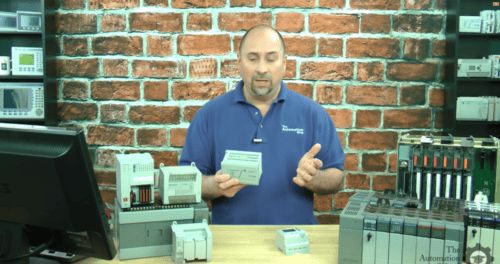
For those who’d prefer to learn with a physical PLC, we also cover which Programmable Controllers and programming cables work best and why, as well as how to set them up and program them. We even provide a list of the components and devices used to build the affordable, homemade PLC trainer used in this course.

We stay involved after the sale: we actively encourage students to post questions in the lesson discussion area, and our expert instructors visit The Automation School each weekday to answer them. You’re also welcome to retake any lesson at any time — none of our courses expire.

Finish the course and pass all the quizzes, and you’ll earn an official Completion Certificate from The Automation School listing the Professional Development Hours you’ve completed.

Topics Covered in PLC Basics Second Edition

Below is a summary of the topics covered in each edition. For a complete list of topics, see the course lesson list.

Standard Second Edition Topics:

  • What a PLC is
  • Styles and types of PLCs
  • Numbering systems and data types
  • What Ladder Logic is and how it works
  • How to set up Serial and Ethernet communications
  • Creating, testing, and troubleshooting MicroLogix programs in RSLogix
  • How to integrate push buttons, pilot lights, motors, and photo eyes with PLC logic
  • How to use PLCs in motor control and part sensing applications

Extended Second Edition Topics:

  • Conveyor jams and blockages
  • Elapsed run times
  • Production tracking
  • Mathematical equations
  • Comparison instructions
  • Analog inputs and outputs
  • Migrating SLC-500 programs
  • And more!

Who Should Take This Course

Anyone who has basic electrical knowledge and wants to learn how to set up, program, and troubleshoot PLCs.

Who This Course Is NOT For

  • Experienced PLC programmers looking for CompactLogix or ControlLogix (Logix) training — see our Compact Basics and PAC Basics courses instead
  • Anyone looking for PLC training on non-Allen-Bradley platforms (e.g. Siemens, Mitsubishi, Omron)
  • Anyone who only needs SCADA/HMI screen-building skills, without PLC programming
  • Anyone who needs lessons on basic electricity or basic wiring skills, which this course does not include
  • Anyone who feels the need to complete the optional hands-on exercises, but is unable or unwilling to use one of the free or low-cost options covered in free preview lesson 1.02. This is rarely a problem, but obviously some initiative is required of students who wish to complete the hands-on labs on their PC.

Meet Your Instructor
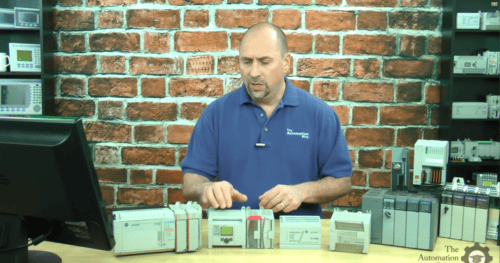
Shawn Tierney

Industrial Automation Instructor
Founder of The Automation School, The Automation Blog, and host of The Automation Podcast and Show

Hi, I'm Shawn Tierney, and I've spent more than 35 years helping electricians, technicians, engineers, and programmers learn how to setup, program, and troubleshoot industrial automation products and systems.
During my first 25 years I attended over fifty weeks of Rockwell Automation training, and earned several certifications, including becoming a Rockwell Automation Certified Controls & Information Specialist.
And since 2015 I've focused full-time on creating practical online and in-person training courses to help people like you build and maintain real-world PLC, HMI, and SCADA systems.

Throughout my career I've trained thousands of automation professionals in manufacturing, OEM, and system integration environments. Every course I create is based on practical field experience, emphasizing techniques you can immediately apply on the plant floor.

My goal is simple: help you become more confident, more productive, and more valuable as an automation professional.

  • 35+ Years in Industrial Automation
  • Rockwell Automation Certified Controls & Information Specialist
  • Instructor to Thousands of Automation Professionals
  • Creator of The Automation School
  • Author of The Automation Blog
  • Host of The Automation Podcast and Show

Learn more about Shawn at .


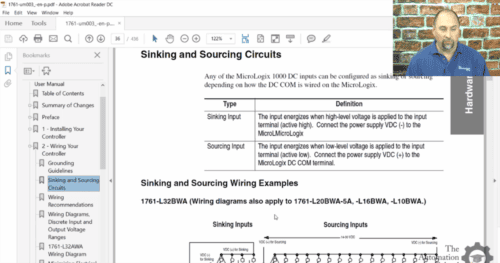
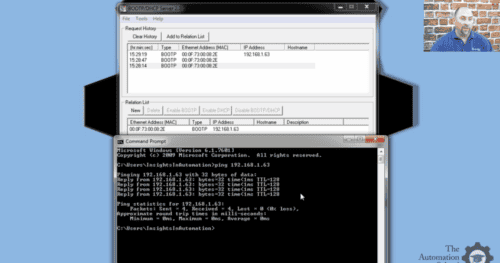
Video: MicroLogix Hardware, Software, and Simulation Options

Course and Bundle Pricing

PLC Basics course and bundle pricing comparison
Feature PLC Basics
Remastered First Edition
PLC Basics
Extended Second Edition
A-B Mega Bundle
Save 45%
A-B Ultra Bundle
Save 45%
Price $34 $99 $699 $899
Instant & lifetime access ✓ ✓ ✓ ✓
PLC App Sim (Win 10/11) ✓ ✓ ✓ ✓
Lesson Q&A support ✓ ✓ ✓ ✓
Live Q&A (Lesson 1.11) ✓ ✓ ✓ ✓
Completion certificate with PDHs ✓ ✓ ✓ ✓
Intermediate lessons — ✓ ✓ ✓
Bonus videos — ✓ ✓ ✓
New MicroLogix course — ✓ ✓ ✓
Micro800 courses — — ✓ ✓
CompactLogix courses — — ✓ ✓
ControlLogix courses — — ✓ ✓
PanelView Plus / FTViewSE courses — — ✓ ✓
CCW VFD Quickstart — — ✓ ✓
Mastering PLCLogix / Factory I/O — — — ✓
SLC-500, PLC-5, SLC-100 & DeviceNet — — — ✓
Enroll Buy 1st Ed Online Course Buy 2nd Ed Online Course Buy 11 Course Bundle Buy 17 Course Bundle

Note: to purchase this course as a gift, or for someone else to take, choose the Voucher option at the top of the page.

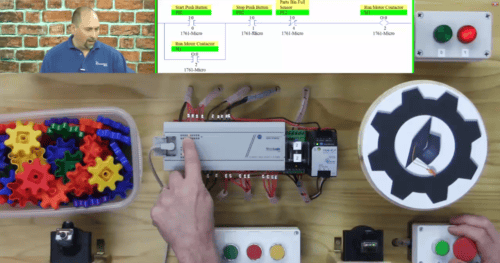
Video: Hands-on Exercises

This lesson covers the benefits of the PLCs used in this course, chief among them free programming and emulation software.

Note: If the sample lesson video above does not load, your place of business may be blocking our video host, Vimeo.com. To verify this, try viewing the video on your cell phone or home PC, or ask your IT department to unblock educational videos hosted on Vimeo.com. You can also view another sample lesson here.

Lesson Snapshots

Student Reviews

All students who complete the course are invited to leave a review, and you can see all the existing student reviews on the Reviews tab above.

Course Requirements

Requirements to follow along and/or complete any optional exercises

Students who wish to complete any optional exercises, or just follow along with the instructor as he teaches, will need the following:

  • An internet connection to take this online course, and to optionally download the free PLC programming and emulation software from Rockwell’s website
  • To write programs, an installed copy of RSLogix Micro Starter Lite (free) or better
  • To use a physical PLC in place of the free PLC emulator, either a MicroLogix 1000 or 1100, plus a programming cable compatible with your PLC and PC (all of this is covered in the course)
  • A Windows PC compatible with the above software (see below) and PLC
  • Optionally, any input (push buttons, switches, etc.) or output (pilot lights, relays, etc.) devices you’d like to use with your MicroLogix 1000 or 1100 — a list of the devices we use is provided
  • Note: while the course covers how to find I/O wiring diagrams, it does not include lessons on basic electricity or basic wiring skills

Note: Currently, Rockwell states their free RSLogix PLC and emulation software supports these Windows versions:

  • Windows XP Pro SP3 32-bit
  • Windows Vista, Home or Business
  • Windows 7, Home or Pro
  • Windows 8, Home or Pro
  • Windows 10 & 11 (unofficial, instructor tested)

Course Pre-sales Questions

Have a question about this course? Send it to the instructor below.

Pre-sales Contact Form (#11)

Submitting from course page: PLC Basics Extended Second Edition


Frequently Asked Questions

General Questions

Is this course beginner friendly? Do I need previous PLC experience?

Yes.

PLC Basics was designed for students with no prior Programmable Controller experience. All you need is basic electrical knowledge and a Windows PC.

The course starts with what a PLC is and how it works, then covers numbering systems and data types, and what Ladder Logic is and how it works, before moving on to creating, testing, and troubleshooting programs.

Who is this course designed for?

I specifically designed this training for electricians, technicians, and engineers who want to learn how to set up, program, and troubleshoot PLCs.

Whether you’re completely new to PLCs, or you’re an industrial electrician or maintenance technician responsible for keeping a PLC-controlled machine or system running, this course will help you develop the skills needed to confidently set up, program, and troubleshoot Allen-Bradley MicroLogix PLCs.

I also focus on the practical skills industrial automation professionals actually use every day. You’re not just going to learn how to write basic Ladder Logic—you’ll learn how to apply it to real-world industrial applications such as motor control, part sensing, and production tracking.

How long does it take to complete?

The required video lessons total more than six hours of instruction. However, that does not include any additional time you choose to spend completing the optional hands-on exercises.

Most required lessons are 20 minutes or less, allowing you to complete them whenever your schedule permits without having to set aside several hours at a time.

And since all of my courses include lifetime access, you can return and review any lesson as often as you like.

Do I need physical PLC hardware and/or a physical PLC trainer?

No. You do not need a physical MicroLogix controller or hardware trainer to complete this course.

All hands-on exercises are completely optional, and I show you how to download and use the free editions of the Allen-Bradley PLC programming and emulation software used in this course, so you can create and test programs on your PC without purchasing any hardware.

One free option I provide my students is a license of my PLC Application Simulator. This lightweight Windows 10 and Windows 11 application simulates a generic PLC along with my classic “Widget Machine,” allowing you to build and test the Ladder Logic solutions covered in the optional exercises without requiring any other hardware or software. While it doesn’t exactly replicate a specific Programmable Controller, it’s very similar and a license is provided free to all my PLC/PAC students.

For students looking for a more advanced experience, I also introduce Logic Design’s PLCLogix 500 simulator (Lesson 1.07), as well as Factory I/O, which can be used with Ethernet MicroLogix and SLC-500 controllers (Lesson 1.06).

And for those who’d prefer to learn with a physical PLC, I cover which MicroLogix controllers and programming cables work best and why, as well as how to set them up and program them. I even provide a list of the components and devices used to build the affordable, homemade PLC trainer used in this course.

For more detailed information about these and other available options, please watch Lesson 1.02, which is available as a free preview before purchasing the course.

What software do I need to complete the hands-on exercises and labs?

The PLC programming and emulation software used in this course is free.

I show you how to download, install, and set up RSLogix Micro Starter Lite, along with the free emulation and RSLinx communications software, from Rockwell’s website.

For more information, see Lesson 1.02 (available as a free preview before purchasing the course) and the Course Requirements section above.

Is instructor support included?

Yes.

When you enroll in this course, you receive more than just the video lessons and downloadable materials—you also receive direct access to the instructor for lesson-related questions.

At the bottom of every lesson is a discussion area where students can post questions, and I personally answer them.

And if a written response isn’t enough to resolve your question, eligible students may also schedule a short Microsoft Teams meeting with me during office hours (see Lesson 1.11).

Note that the number of complimentary live meetings available depends on the course you’ve purchased, and these sessions are specifically intended to answer questions related to the course material, and not as a free consulting or tech support service.

For those students seeking assistance beyond the course content, paid mentoring services are also available for topics covered in my training (see Lesson 1.12).

Is the course self-paced?

Yes.

The course is completely self-paced, allowing you to progress through the lessons according to your own schedule and learning style.

Because all of my courses include lifetime access, you can also revisit and review any lesson as many times as necessary.

Does the course include labs?

Yes.

This course includes numerous optional hands-on exercises that allow you to apply what you’ve learned throughout the video lessons and demonstrations.

For students who don’t own a MicroLogix controller, I also discuss several free and low-cost ways to complete the optional exercises in Lesson 1.02, which is available as a free preview before purchasing the course.

Will I receive a certificate?

Yes.

Completing this course is a significant achievement, and I want to make sure you have professional documentation recognizing your accomplishment.

Once you’ve passed all required quizzes and marked every lesson complete, a link will appear on the course homepage allowing you to view, print, and download your course completion certificate. You’ll also find links to leave course feedback, request a discount on your next course, and submit a course review.

Your certificate also lists the Professional Development Hours (PDHs) you’ve earned while completing the course. These hours are calculated based on the time required to complete all required lessons and successfully pass the quizzes (students may retake quizzes as needed), ensuring they represent meaningful professional development.

Please note that time spent completing the optional hands-on exercises is not included in the PDHs listed on your certificate.

However, upon request, I do offer an optional “exercise review” service for an additional fee. This allows you to earn additional PDHs by having me personally review each of the programs you created while completing the optional exercises. Interested students should reach out to me directly using the “Contact” link at the top of the site.

Technical Questions

Which MicroLogix controllers are covered?

This course focuses on the MicroLogix 1000 and MicroLogix 1100, which can both be programmed using free software from Rockwell. I explain why I chose these controllers in Lesson 8.

For students who want to learn more about the entire MicroLogix family, my new 2027 MicroLogix course, MicroLogix Programming Level 1, is bundled with this course at no additional charge.

Which programming software is used? Is RSLogix Micro covered?

Yes.

This course uses RSLogix Micro Starter Lite, the free edition of Rockwell’s MicroLogix programming software, and I show you how to download, install, and set it up on both Windows 7 and Windows 10 (Lessons 21A and 21B).

Does the course cover Serial and Ethernet communications?

Yes.

The course covers setting up both Serial and Ethernet communications in RSLinx, as well as going online with Emulate (Lessons 24 through 26).

In the Extended portion of the course, I also demonstrate DF1 messaging (MSG) with both the MicroLogix 1000 and 1100 (Lessons 55 and 56).

Are analog inputs and outputs covered?

Yes.

Analog inputs and outputs are covered in the Extended portion of the course.

Does the course cover MicroLogix expansion I/O?

Yes.

I cover adding and using 1762 Expansion I/O in Lesson 57.

Programming Questions

Does the course teach Ladder Logic programming and troubleshooting?

Yes.

Unlike my CompactLogix and ControlLogix courses, which assume you already understand Ladder Logic, this course starts from the beginning by explaining what Ladder Logic is and how it works (Lessons 17 and 18).

From there, I spend a significant amount of time writing, explaining, and troubleshooting Ladder Logic programs because Ladder Logic remains the most widely used programming language for Programmable Controllers in North America.

Does the course explain PLC memory, program files, and data files?

Yes.

Understanding how a PLC organizes its memory is essential to reading and writing programs, so I cover PLC memory, program files, and data files in detail (Lesson 23).

In the Extended portion of the course, I also cover using subroutines (Lesson 52).

Are Timers and Counters explained?

Yes.

Timers and Counters are fundamental instructions that every PLC programmer and troubleshooter should understand.

Throughout this course, you’ll use them in real-world applications, including detecting conveyor jams, tracking elapsed run times, and counting parts.

Are math and comparison instructions covered?

Yes.

The Extended portion of the course covers the ADD, SUB, MUL, and DIV math instructions, the GRT and LES comparison instructions, and using MOV to copy part counts (Lessons 40, 43, 44, and 45).

Will I learn Online Editing?

Yes.

Making changes to a running machine is one of the most valuable skills a PLC programmer can have, but it’s also one that should only be performed with a complete understanding of the process and its potential consequences.

In this course, I explain the Online Editing workflow in detail (Lesson 54).

Does the course cover Indirect Addressing?

No.

I may cover it in a future course, but it is not covered in this one.

Practical Questions

Can I use what I learn at work immediately?

Yes.

I’ve designed this course to take you from the fundamentals to real-world applications.

Early in the course, you’ll learn how to identify MicroLogix hardware, locate manuals and documentation, set up RSLinx communications, and go online with your PLC.

From there, you’ll build motor control, run/stop indication, and bin full detection applications, and learn how to troubleshoot your control logic.

In the Extended portion, you’ll also learn how to detect conveyor jams, track elapsed run times and production counts, perform math and comparison operations, Force I/O, and perform Online Edits.

The goal isn’t simply to teach software—it’s to teach the practical skills you’ll use to set up, program, and troubleshoot real PLC systems.

Will this help me troubleshoot production equipment? How much troubleshooting is included?

Yes.

Troubleshooting isn’t confined to a single lesson—it’s integrated throughout the course, and Lesson 32 is dedicated to troubleshooting control logic.

In the Extended portion, I also cover Forcing I/O (Lesson 51) and Online Editing (Lesson 54), two essential skills when troubleshooting field devices and running machines.

Can I learn without access to a PLC?

Yes.

I answer a similar question earlier in this FAQ (“Do I need physical PLC hardware and/or a physical PLC trainer?”), so I’ll simply reiterate that you do not need a physical PLC or a paid software license to successfully complete this course.

When I created this course, I chose PLCs that can be programmed and emulated using free software from Rockwell, so that students without access to equipment or a training budget could still learn hands-on.

I also provide every PLC/PAC student of mine with a license for my PLC Application Simulator for Windows 10 and Windows 11, along with information about several additional free and low-cost alternatives.

For more information, please refer to Lesson 1.02 or the previous hardware question.

Can I follow along using Emulate?

Yes.

I show you how to download, set up, and test your programs using Rockwell’s free emulation software (Lesson 24), so it can serve as your PLC while completing the course demonstrations and optional exercises.

Does the course cover migrating SLC-500 programs?

Yes.

In the Extended portion of the course, I demonstrate how to migrate digital-only SLC-500 programs (Lesson 61).

Will I learn how to Force I/O?

Yes.

Knowing how and when to Force I/O safely is an important skill for everyone using or maintaining programmable controllers, and I cover it in Lesson 51.

Career Questions

Should I take PLC Basics before learning CompactLogix or ControlLogix?

Yes, if you’re new to PLCs.

My CompactLogix and ControlLogix courses assume you already know what a Programmable Controller is and how it works, what Ladder Logic is and how it works, and what Data Types are and how they are used.

PLC Basics covers all three, which makes it the recommended starting point before taking Compact Basics or PAC Basics.

Is this useful for maintenance electricians?

Yes.

I built this course specifically with electricians and technicians in mind.

For many maintenance professionals, the PLC isn’t just something they program—it’s one of the most valuable diagnostic tools available for determining why a machine isn’t running.

Because of that, I focus on practical skills such as reading Ladder Logic, going online with a running PLC, troubleshooting control logic, Forcing I/O safely, and performing Online Edits.

License Agreement and Permitted Use of Our Online Courses

This section covers the license agreement and permitted use of our online courses and course bundles, which also includes any course materials, code snippets, downloads, and provided software — taken together, referred to collectively as a “course.”

The purchase of a single copy of a course grants a single individual the right to use the course for personal instruction and reference only. Purchasing a course for yourself (or for another) does not grant anyone the right to distribute or share that work beyond the single individual who registers to take the course.

Show more

This means the course and course materials may not be shared with friends, relatives, co-workers, students, or anyone else, as each sale is for an individual license to access, view, and take the lessons, quizzes, and exercises, and to download any course materials, documents, code, files, and software included with the course.

This per-person licensing helps ensure that the instructor — who created the course and exclusively holds its copyright — can cover the cost of creating it, keeping it available to new and existing customers, and answering ongoing student questions, while receiving fair compensation for a course licensed on a per-person basis.

It is unlawful to share this copyrighted course and course material even if you do not charge or profit from doing so — including for non-profit and governmental organizations — since this proprietary educational work is designed as a chargeable training resource, not one made freely available to the public.

Any unauthorized sharing of the course or course materials would reduce the potential for additional sales and licensing, directly impacting the instructor’s ability to cover costs, keep the course available, and support customers who purchased it lawfully.

If you have questions about the above, please contact us using the “Contact” link in the site menu.

Course Content

1 of 2
4.7 168 Reviews

Reviews

by Gerry Truong May 2, 2024

As someone who is new to this position and eager for it to be a career path for myself, I found this very intriguing and informative content that was presented in this course. I learned a lot and a ton of different ways to program code/logic and understand the instruments/devices as well!

by Andrew Canavan August 28, 2023

First off, I did shop around not so much for cost, but to find an instructor who taught the subject well for me. Shawn was an easy choice. I thought the course was very good and the method of building an evolving program to meet a customer’s needs from scratch was a great way to learn. In addition, being able to revisit lessons to shore up steps is very helpful. I would recommend this course to others.

by Richard Irizarry July 25, 2023

Great Course thanks

by Jesse Stanton March 20, 2023

I cannot recommend this online PLC school enough! The curriculum was incredibly comprehensive, covering everything from the basics of PLC programming to advanced topics like networking and communication protocols. The video lectures and practical exercises were engaging and easy to follow, and the course materials were well-organized and easy to navigate. The instructors were knowledgeable and supportive, always available to answer questions and provide feedback. I felt like I was getting a truly personalized learning experience, even though the course was entirely online. Thanks to this program, I now have a solid understanding of PLC programming and am confident in

by GhassanElectrical January 19, 2023
by CarlosFlores January 10, 2023
by MarkBrewer March 8, 2022
by JasonSpencer January 2, 2022
by ChristopherGlick December 30, 2020

I am taking a PLC course at my community college and have benefited from various topics presented in this course.

by Vicente Vives September 18, 2020

Great Info

About the Instructors

I'm a lifelong Technology Enthusiast who began programming in the early 80s on the Apple II and VIC-20 personal computers. After earning a degree in Electronics, I worked as a Rockwell Automation Certified Controls and Information Automation Specialist for 25 years before leaving to become a full-time Industrial Automation instructor and mentor at TheAutomationSchool, as well as publishing industry interviews, news and product how-to’s at TheAutomationBlog.com. If you're interested in my training, mentoring, or becoming a sponsor, please schedule a Teams meeting with me via https://calendly.com/shawntierney/business-meeting

You may also like

Watch Now
Watch Now
Watch Now